Ngày nhận bài:14/01/2026
Ngày phản biện:19/01/2026
Ngày duyệt đăng:24/1/2026
ABSTRACT
Durian (Durio zibethinus L.) peel is a lignocellulosic by-product that accounts for a large proportion of waste generated from the rapidly expanding durian processing industry in Vietnam and Southeast Asia. This study evaluates the physical, mechanical, chemical, and calorific properties of durian peel to assess its potential use as a feedstock for biomass energy and biochar production. The results show that fresh durian peel has a very high moisture content (76.47 ± 0.10%), resulting in an extremely low apparent energy value. Its peel thickness is 28.5 ± 2.6 mm, hardness 30.98 ± 1.82 N, compressive strength 1.85 ± 0.21 MPa, and tensile strength 0.96 ± 0.12 MPa. After drying, the durian peel exhibits a bulk density of 0.26 ± 0.02 g/cm³, water activity of 0.31 ± 0.02, and reduced thickness of 17.8 ± 1.9 mm, while mechanical properties increase significantly, with hardness reaching 62.8 ± 4.1 N, compressive strength 3.45 ± 0.30 MPa, and tensile strength 2.05 ± 0.20 MPa. In terms of chemical characteristics, dried durian peel has a pH of 5.63 ± 0.02, high volatile matter content (72.37 ± 0.09%), an appropriate fixed carbon content (20.05 ± 0.13%), ash content of 7.58 ± 0.04%, cellulose content of 32.27 ± 0.12%, and lignin content of 19.69 ± 0.07%. After drying, the higher heating value (HHV) increases to approximately 17.8 MJ kg⁻¹, comparable to that of many common agricultural residues. These results indicate that the low energy value of fresh durian peel is mainly due to its high moisture content rather than its intrinsic material properties. With appropriate drying and pretreatment methods, durian peel represents a promising agricultural by-product for biomass energy and biochar production, contributing to agricultural waste reduction, greenhouse gas emission mitigation, and the promotion of a circular economy in Vietnam’s durian processing industry.
Keywords: agricultural by-products; biomass energy; biochar; durian peel; mechanical properties; physicochemical characterization.
1. INTRODUCTION
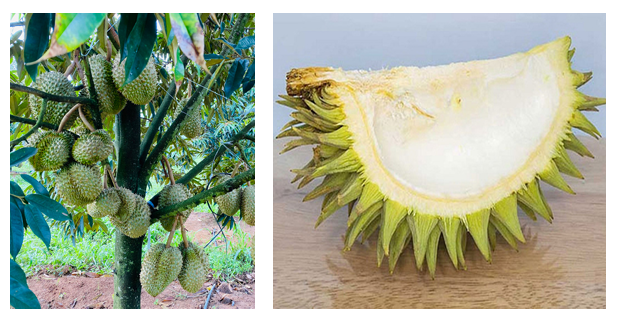
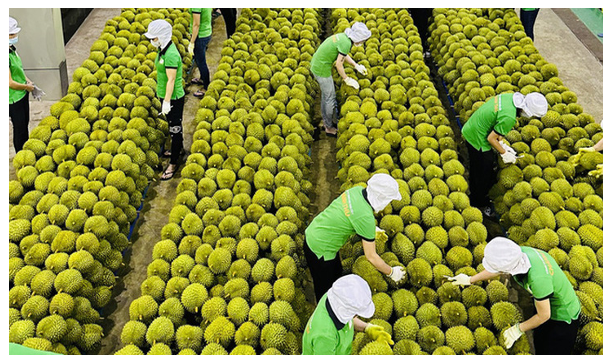
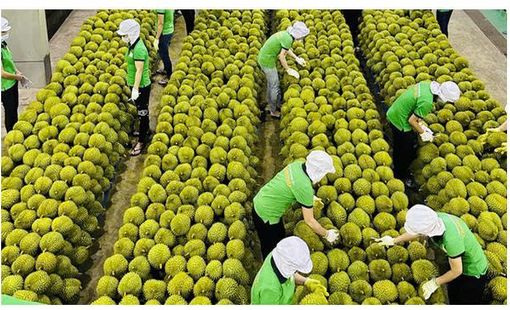
Durian (Durio zibethinus L.) is a high-value tropical fruit widely cultivated in Southeast Asia, with Vietnam emerging as one of the fastest-growing producers in the region in recent years. The rapid ex pansion of durian cultivation and export, particularly driven by demand from the 1 Chinese market, has resulted in a substan tial increase in processing volume and associated postharvest by-products [1,2]. Among these by-products, durian peel represents the dominant fraction, account ing for approximately 65–75% of the total fruit mass, which corresponds to several hundred thousand tons generated annual ly at current production levels [3]. If not properly managed, the accumulation of durian peel can cause environmental pol lution, unpleasant odors, and increased microbial activity, while also leading to the loss of a potentially valuable biomass resource that could otherwise be utilized for energy or material applications [3,24].
From a material perspective, durian peel is a lignocellulosic biomass com posed primarily of cellulose, hemicellu lose, and lignin, which together constitute the majority of its dry matter and govern its physical, mechanical, and chemical behavior [4,7,11]. Owing to this compo sition, durian peel has attracted increasing attention as a renewable feedstock for bio mass-based applications, including solid biofuels, biochar, particleboard, and bio based composite materials [4,8,10,23]. Previous studies have reported that durian peel fibers exhibit favorable mechanical and thermal properties when incorporat ed into polymer composites or construc tion materials, while recent investigations have demonstrated the feasibility of pro ducing biochar and smokeless fuel from durian rind [9, 11,2 3]. These findings in dicate that durian peel possesses intrinsic characteristics suitable for energy-related valorization, provided that appropriate pretreatment and processing strategies are applied.
In biomass energy systems, feedstock characteristics play a decisive role in de termining fuel quality, process efficiency, and operational stability. Key parameters include moisture content, bulk density, mechanical strength, ash content, volatile matter, fixed carbon, and higher heating value (HHV), all of which directly influ ence drying requirements, densification behavior, combustion efficiency, and char yield [18, 21]. Among these parameters, moisture content is particularly critical, as excessive moisture severely suppresses ef fective heating value, increases energy de mand for evaporation, and reduces overall thermal efficiency, especially under trop ical processing and storage conditions [6,19]. Therefore, systematic evaluation of both fresh and dried biomass is essen tial to accurately assess energy potential under practical utilization conditions.
Accordingly, numerous studies at both national and international levels have focused on elucidating the mechanical, physical, and chemical properties of duri an peel and comparing them with other ag ricultural residues to evaluate its practical applicability. In Vietnam, Xuan Loc et al. (2023) [7] investigated the physicochemi cal characteristics of durian peel and jack fruit peel for biochar production. Their results showed that durian peel exhibit ed a higher moisture content (85%) than jackfruit peel (81.7%), while the biochar yield was comparable (39% vs. 39.7%). Moreover, durian peel had a higher car bon content (49.8% vs. 45.7%) and low er ash content (14% vs. 21%) compared with jackfruit peel. In addition, Tang and Nguyen (2025) [8] reported that durian peel had a holocellulose content of 72.84 ± 0.89% (dry basis), comparable to pre vious studies (65.3–73.54%) and bamboo (62.5–79.9%), whereas the lignin content was 15.92 ± 0.56%, significantly lower than that of bamboo (20.5–32.2%), indi cating its potential for particleboard and biocomposite production.
Globally, Charoenwai et al. (2005) [9] reported that the chemical composition of dried durian peel and treated durian peel fiber showed no significant differences, with lignin contents of approximately 10.7–10.9% and ash contents of 4.3 5.5%. Alkaline treatment increased holo cellulose content from 47.1% to 54.2% and α-cellulose from 31.6% to 35.6% due to partial dissolution of lignin and hemi cellulose, confirming the suitability of du rian peel fibers for sustainable construc tion materials. Manshor et al. (2014) [10] reported that durian peel mainly consisted of 60.45% cellulose, 15.45% lignin, and 13.09% hemicellulose, comparable to many natural wood fibers and indicating its potential as a filler in biocomposite systems. Furthermore, Lubis et al. (2018) [11] investigated the chemical, mechani cal, and physical properties of fibers ex tracted from durian peel (Durio zibethinus Murr.) collected in North Sumatra and re ported high cellulose content (57–64%), hemicellulose content of approximately 30.7%, and lignin content of about 13.6%. The fibers exhibited a tensile strength of approximately 298 MPa and an elastic modulus of 5.987 GPa, demonstrating the potential of this by-product for sustain able and environmentally friendly materi al applications. Additionally, Masrol et al. (2018) [12] analyzed the chemical com position of durian peel and reported α-cel lulose of 34.9%, holocellulose of 58.3%, lignin of 19.3%, pentosan of 10.6%, and ash of 6.1%, reflecting a typical lignocel lulosic structure and confirming its suit ability as a raw material for pulp and pa per production.
Despite the increasing interest in duri an peel utilization, most existing studies have focused on individual properties or specific applications such as biocompos ites, pulp and paper, or preliminary bio char production. Comprehensive datasets integrating physical, mechanical, chemi cal, and calorific properties remain limited [4,7,12]. In particular, combined evalua tion of fresh and dried durian peel to clar ify the dominant role of moisture content and pretreatment on energy performance has not been sufficiently investigated in the context of biomass energy utilization in Vietnam.
Therefore, the objective of this study is to systematically evaluate the physi cal, mechanical, chemical, and calorific properties of durian peel in both fresh and dried states to determine its potential as a lignocellulosic biomass feedstock for en ergy and biochar production. This study focuses on feedstock characterization, providing a scientific basis for subsequent research on pelletization, carbonization, and thermal conversion of durian peel in sustainable biomass energy systems.
2. MATERIALS AND METHODS
2.1. Raw materials and sample prepa ration
Durian peel (Durio zibethinus L.) was collected from commercial durian pro cessing facilities located in the Central Highlands and Mekong Delta regions of Vietnam. The collected peels consisted mainly of exocarp and mesocarp tissues, which together account for the majority of durian peel mass. Visible impurities, ad hering pulp residues, and damaged parts were manually removed prior to analysis.
Fresh durian peel samples were cut into pieces of approximately 2–3 cm to improve homogeneity. A portion of the samples was analyzed immediately as fresh material, while the remaining sam ples were dried in a forced-air convection oven at 60–70 °C until constant mass was achieved, corresponding to a moisture content below 10% (wet basis). After dry ing, the samples were ground using a lab oratory mill and sieved to obtain particle sizes below 1 mm. All dried samples were stored in airtight polyethylene bags at 25 ± 2 °C prior to further analysis to mini mize moisture reabsorption.
2.2. Determination of physical proper ties
Moisture content was determined us ing the oven drying method in accordance with TCVN 9706:2013 [15]. Bulk densi ty of dried durian peel was measured by the volume displacement method follow ing established procedures for agricultur al biomass materials [20]. Water activity was determined at 25°C using a calibrated water activity meter to assess storage sta bility under tropical conditions.
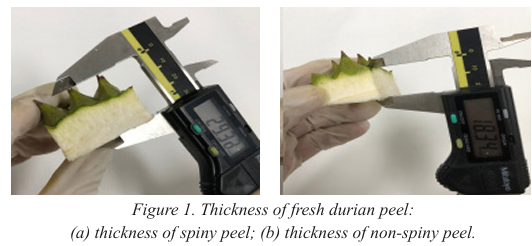
Peel thickness was measured for both spiny and non-spiny regions using a digi tal vernier caliper with a precision of 0.01 mm. Measurements were conducted at multiple positions on each peel sample to account for natural structural heterogene ity.
2.3. Mechanical property analysis
Mechanical properties of durian peel were evaluated for both fresh and dried samples. Hardness, compressive strength, and tensile strength were measured using an IMADA MX-500N automatic push pull force testing machine equipped with appropriate fixtures for biological materi als.
For hardness and compressive strength measurements, peel specimens were sub jected to uniaxial loading at a constant crosshead speed until failure. Tensile strength was determined using standard ized strip-shaped specimens prepared from peel sections. All measurements were conducted at ambient temperature (25 ± 2°C), and each test was performed in triplicate.
2.4. Chemical and proximate analysis
The pH of dried durian peel was mea sured using a calibrated digital pH meter after suspension of ground samples in dis tilled water. Proximate analysis was con ducted to determine volatile matter and ash content following TCVN 172:2019 [13] and TCVN 173:2019 [14], respec tively. Fixed carbon content was calculat ed by difference.
Structural carbohydrate and lignin con tents were determined using standard bio mass characterization procedures. Cel lulose content was measured using the Seifert method, while lignin content was determined according to the Klason meth od as described by Sluiter et al. [17].
2.5. Calorific value determination
The higher heating value (HHV) of du rian peel was measured experimentally on an as-received basis using an isoperibol bomb calorimeter calibrated with benzoic acid. Measured HHV values were subse quently converted to dry basis (DB) and dry ash-free basis (DAF) according to standard conversion procedures common ly applied in biomass energy studies [19].
2.6. Statistical analysis
All experiments were conducted in triplicate (n=3). Results are reported as mean ± standard deviation. Statistical dif ferences between fresh and dried durian peel samples were evaluated using Stu dent’s t-test, with differences considered statistically significant at p < 0.05.
3. RESULTS AND SUBMISSION
3.1. Physical properties of durian peel and implications for energy utilization
The physical properties of durian peel in the as-received state and after drying are critical determinants of its applicability as a biomass fuel, particularly with respect to drying behavior, storage stability, and thermochemical conversion performance. The corresponding analytical results are summarized in Table 1.
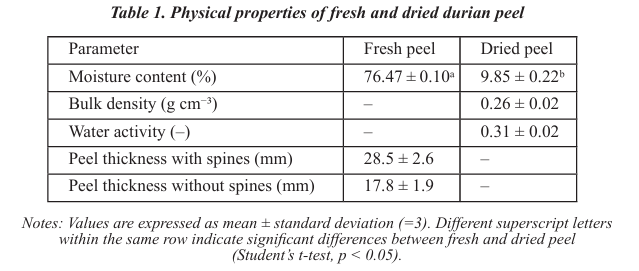
The analysis results show that fresh du rian peel has an average moisture content of 76.47 ± 0.10%, which is significantly higher than that of several common agri cultural residues such as fresh sugarcane bagasse (45 - 55%) and rice husk (10 - 15%) [18]. This high moisture content is characteristic of plant tissues with po rous structures and thick cell walls, which help protect the edible pulp from moisture loss and mechanical damage during fruit growth and ripening.
However, when durian peel is used as a feedstock for biomass combustion or bio-thermochemical conversion, its high moisture content becomes a disadvantage. Water retained within the cellular structure reduces the effective heating value and combustion efficiency, while generating excessive smoke and unburned gases, as a large portion of the initial energy input is consumed for moisture evaporation. In addition, high moisture content promotes ash agglomeration and slag formation in the combustion chamber, leading to metal corrosion and reduced equipment lifes pan. Therefore, to achieve optimal ener gy efficiency, the material should undergo primary drying to a moisture content of ≤10% prior to use. Controlling moisture at this level not only improves combus tion performance but also stabilizes ma terial mass, reduces transportation costs, and extends storage life.
The bulk density of dried durian peel is 0.26 ± 0.02 g/cm³, which falls within the medium range of lignocellulosic bio mass materials and is comparable to saw dust (0.20–0.35 g/cm³) and coffee husk (0.18 - 0.24 g/cm³) reported in previous studies [19,20]. This moderate bulk den sity indicates favorable characteristics for grinding, densification, transportation, and storage processes [21]. In biomass pellet production, such density is advan tageous because the particles can readily rearrange and bond during compaction, resulting in pellets with higher density, improved combustion efficiency, and en hanced burning stability.
The water activity (aₙ) of dried durian peel was determined to be 0.31 ± 0.02, which is significantly lower than the threshold required for microbial growth (0.6). Low water activity implies a re duced risk of mold and microbial devel opment, thereby extending natural storage duration without the need for chemical preservatives. This characteristic is par ticularly beneficial for long-term storage and transportation of biomass feedstock under open environmental conditions, es pecially in humid tropical climates such as Vietnam. Low water activity, in com bination with low moisture content, also helps maintain mechanical integrity and reduces agglomeration and material deg radation during storage. This is a key fac tor in the design of biomass supply chains, from collection to pelletization and com bustion [6].
The peel thickness at spiny regions reaches 28.5 ± 2.6 mm, which is signifi cantly greater than that at non-spiny re gions (17.8 ± 1.9 mm). This difference reflects the mechanical and protective function of the spine system, where peel tissues are thicker and denser to withstand external forces. In contrast, non-spiny regions exhibit thinner and more porous structures, facilitating natural fruit crack ing during ripening. This non-uniformity in peel thickness directly affects cutting, grinding, and drying processes during biomass pretreatment. The spiny peel por tions require higher grinding energy and longer drying times, whereas non-spiny portions are more easily fragmented. Therefore, size reduction and thorough mixing of the material prior to drying or pelletization are necessary to ensure ho mogeneity of the biomass fuel.
3.2. Mechanical properties and pro cessability
The mechanical properties of durian peel before and after drying play an im portant role in evaluating the potential application of this material as a biomass energy source, and they also reflect the material behavior during handling, grind ing, and densification prior to thermal conversion. The determined results are presented in Table 2.
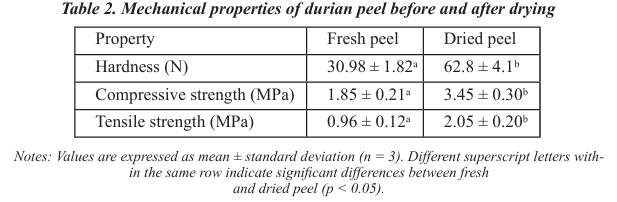
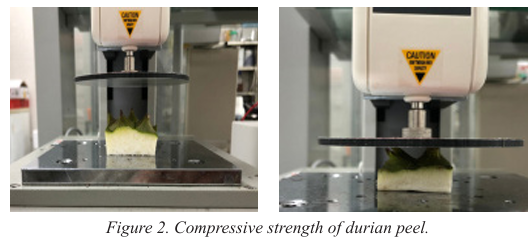
The hardness of dried durian peel reached 62.8 ± 4.1 N, which was marked ly higher than that of fresh peel (30.98 ± 1.82 N), indicating a rigid material struc ture and high resistance to deformation. High hardness suggests that durian peel can withstand impact, compressive, and shear forces due to its dense cellular struc ture and high lignin content in the cell wall. This characteristic is advantageous during transportation and preprocess ing, as it reduces material loss caused by fragmentation. However, it also necessi tates the selection of appropriate grinding equipment, such as roller mills or high speed hammer mills, to ensure stable grinding performance. Moreover, high hardness is directly associated with pro longed combustion behavior, since lignin exhibits thermal stability and slow-burn ing characteristics, contributing to a more stable flame in energy applications [5,22].
The compressive strength of dried peel was 3.45 ± 0.30 MPa, whereas fresh peel exhibited only 1.85 ± 0.21 MPa, indi cating a moderate load-bearing capac ity under compression. The increase in compressive strength after drying reflects structural changes caused by moisture reduction, which enhances contact and bonding among solid constituents [21]. This property improves the ability of the material to maintain its shape during collection, stacking, and transportation. In contrast, in the fresh state, the porous structure and high moisture content result in lower compressive strength, which can be beneficial for mechanical pretreatment steps such as grinding and pressing, there by reducing energy consumption during biomass preparation prior to energy conversion.
Regarding tensile strength, dried peel exhibited a value of 2.05 ± 0.20 MPa, significantly higher than that of fresh peel (0.96 ± 0.12 MPa) and lower than its compressive strength. This result indi cates that the material is more susceptible to failure under tensile stress, consistent with the heterogeneous fiber bonding typ ical of plant tissues. This characteristic is advantageous for biomass fuel applica tions, as easier fiber disruption increases the exposed surface area of the material, thereby enhancing drying efficiency and thermal conversion performance in bio mass energy processes [5].
Overall, drying significantly enhanced the mechanical properties of durian peel. The increase in hardness and compressive strength indicates improved structural in tegrity, which is beneficial for handling, stacking, transportation, and especially biomass pelletization [21]. Meanwhile, the tensile strength after drying remains within a range that allows the material to be readily fractured during grinding, thus not hindering size reduction prior to ther mal conversion. These trends are consis tent with previous studies on lignocellu losic biomass and material applications derived from durian peel [9 - 11,22].
3.3. Chemical composition and fuel characteristics
The chemical and proximate composi tion of dried durian peel, which governs ignition behavior, ash-related perfor mance, and char formation during thermal conversion, is summarized in Table 3.
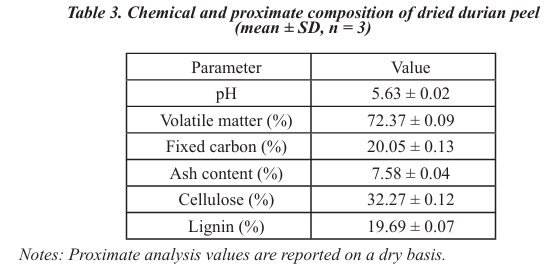
The pH value of 5.63 ± 0.02 indicates that durian peel is mildly acidic, similar to most plant-derived agricultural residues (pH 5–6). This acidity is mainly attribut ed to the presence of natural organic acids such as citric, malic, and tartaric acids, as well as phenolic compounds in the cell tis sues. Material pH significantly influences pyrolysis and catalytic behavior during carbonization; biomass with lower pH often promotes biochar formation due to the enhanced decomposition of hemicel lulose and lignin at lower temperatures. Therefore, a pH of approximately 5.6 is considered suitable for both pelletization and biochar production without requiring chemical neutralization [23,5].
The high volatile matter content of 72.37 ± 0.09% indicates that durian peel is high ly ignitable and releases volatiles rapidly during combustion or pyrolysis [18,19]. This high volatile fraction reflects rapid ignition and intense gas release during the initial combustion stage, which helps sustain flame propagation and shorten ig nition time. In contrast, the fixed carbon content of approximately 20.05 ± 0.13% indicates the ability to maintain stable and prolonged combustion. The ratio of vola tile matter to fixed carbon (~3.6) suggests that durian peel combines high ignitabili ty with good thermal stability, similar to trends reported for common agricultural residues such as sugarcane bagasse and rice husk [18]. These characteristics make it particularly suitable for biomass pellet fuel and pyrolysis feedstock for biochar production.
The ash content of 7.58 ± 0.04% is con sidered moderate—higher than that of sugarcane bagasse (1.5–3%) but signifi cantly lower than that of rice husk (15 20%). High ash content may cause slag ging and fouling in combustion systems; however, with a value below 8%, durian peel is still regarded as a safe combus tion feedstock with limited slagging and corrosion risks. Lower ash content also contributes to improved thermal efficien cy and enhanced durability of combustion equipment during operation [6,18].
Durian peel contains 32.27 ± 0.12% cel lulose and 19.69 ± 0.07% lignin. Cellulose is a linear polysaccharide that is readily combustible and plays a major role in the rapid heat-release stage of combustion, whereas lignin is a three-dimensional ar omatic polymer with high thermal sta bility that decomposes slowly but yields high heat, contributing to prolonged combustion and flame stability. The cel lulose and lignin contents of durian peel are comparable to those of common ag ricultural residues such as rice husk (cel lulose 35–40%, lignin 22–25%) and sug arcane bagasse (cellulose 40–45%, lignin 18–21%) [23,5]. Notably, lignin also acts as a natural binder during heating; it softens and forms interparticle bonds during pelletization, enhancing pellet mechanical strength, reducing dust forma tion, and minimizing the need for chemical additives.
Overall, considering pH, ash, cellulose, and lignin contents, durian peel exhib its balanced physicochemical properties, ease of processing, and high energy po tential, making it a promising biomass feedstock for renewable fuel production, biochar generation, and environmentally friendly biobased materials [5].
3.4. Calorific value and energy poten tial
The higher heating values (HHV) of durian peel measured on an as-received, dry, and dry ash-free basis are presented in Table 4.
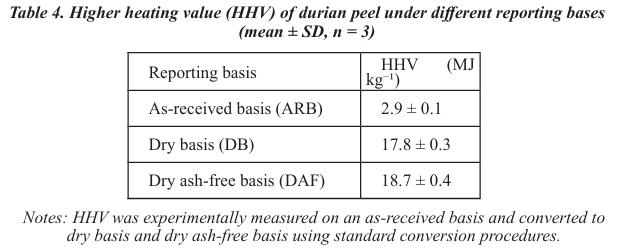
The results show that raw durian peel exhibits a very low heating value due to its extremely high total moisture content (83.9%). Most of the energy generated during thermal conversion is consumed for water evaporation, which severely reduces the overall energy utilization ef ficiency. However, when expressed on a dry basis (DB) and dry ash-free basis (DAF), the gross calorific value of durian peel is comparable to that of many ligno cellulosic biomasses currently exploited as bioenergy feedstocks, such as sugar cane bagasse, coffee husk, and sawdust [18,19].
The large discrepancy between the heat ing values on an as-received basis (ARB) and dry basis highlights the critical role of drying and moisture-reduction pre treatment. In the context of utilizing du rian peel for biomass energy and biochar production, moisture control is not only a technical requirement but also a key fac tor determining energy efficiency and the economic feasibility of the entire conver sion chain [6,19,23].
4. CONCLUSIONS
The results of the mechanical, physi cal, and chemical characterization indi cate clear differences between fresh and dried durian peel. Dried peel exhibited high hardness (62.8 ± 4.1 N), compressive strength (3.45 ± 0.30 MPa), and tensile strength (2.05 ± 0.20 MPa), which were significantly higher than those of fresh peel (hardness 30.98 ± 1.82 N, compres sive strength 1.85 ± 0.21 MPa, tensile strength 0.96 ± 0.12 MPa). The increase in mechanical parameters after drying reflects structural changes in the plant tissue, resulting in improved load-bear ing capacity during collection, stacking, transportation, and compaction processes.
In addition, durian peel exhibited a mod erate bulk density (0.26 ± 0.02 g/cm³) and low water activity (0.31 ± 0.02), indicat ing good storability, low susceptibility to microbial growth, and stability under tropical climatic conditions. However, the natural moisture content of fresh peel was extremely high (76.47 ± 0.10%), requiring primary drying to reduce moisture and im prove combustion efficiency and energy utilization. Furthermore, the peel showed a high volatile matter content (72.37%), fixed carbon content (20.05%), and mod erate ash content (7.58%), which helps limit slagging and equipment corrosion, along with balanced cellulose (32.27%) and lignin (19.69%) contents.
Based on these characteristics, durian peel is evaluated as a promising biomass feedstock for various clean energy tech nologies, including fuel pellet production, biochar generation, and direct combustion in industrial boilers. The valorization of this agricultural by-product not only con tributes to reducing agricultural waste and environmental pollution but also provides significant economic benefits, supporting circular economy models and sustainable development in the Vietnamese durian processing industry.
REFERENCES
[1].FAO (2024). Durian production and trade statistics. Food and Agriculture Organization of the United Nations.
[2].Vietnam Fruit and Vegetable Association (2024). Vietnam fruit and vegetable export report 2023. Hanoi, Vietnam.
[3].Nguyen, T.H.; Tran, T.T.M. (2021). Utilization of agricultural by-products in Vietnam: Current status and challenges. Vietnam Journal of Science and Technology, 59(4), 512–520.
[4].Razali, M.; Mohammad, S.; Zakaria, Z. (2021). Durian husk as renewable biomass feedstock: Characterization and biochar properties. MyFood Research, 44(3), 101–110.
[5].Yang, H.; Yan, R.; Chen, H.; Lee, D.H.; Zheng, C. (2007). Characteristics of hemicellulose, cellulose and lignin pyrolysis. Fuel, 86(12–13), 1781–1788.
[6].Phan, V.H.; Nguyen, T.M. (2022). Optimization of moisture and density in biomass pellet production. Journal of Energy Science and Technology, 8(4), 112–118.
[7].Xuan Loc, P.; et al. (2023). Physicochemical characteristics of biomass from durian peel and jackfruit peel. Can Tho University Journal of Science, 59 (Environment and Climate Change Special Issue), 221–228.
[8].Tang, T.K.H.; Nguyen, N.Q. (2025). Investigation of particleboard production from durian husk and bamboo waste. Journal of Composites Science, 9(6), 276.
[9].Charoenwai, S.; Khedari, J.; Hirunlabh, J.; Daguernet, M.; Quenard, D. (2005). Impact of rice husk ash on the performance of durian fiber-based construction materials. In: Proceedings of the 10th International Conference on Durability of Building Materials and Components (10DBMC), Lyon, France, pp. TT3-51.
[10].Manshor, A.T.H.; Anuar, H.; Nur Aimi, M.N.; Ahmad Fitrie, M.I.; Nazri, W.B.W.; Sapuan, S.M.; El Shekeil, Y.A. (2014). Mechanical, thermal and morphological properties of durian skin fibre reinforced PLA biocomposites. Materials & Design, 59, 279–286.
[11].Lubis, R.; Saragih, S.W.; Wirjosentono, B.; Eddyanto, E. (2018). Characterization of durian rinds fiber (Durio zibethinus Murr.) from North Sumatera. AIP Conference Proceedings, 2049, 020069.
[12].Masrol, S.R.; Mohamad, N.I.; Hassan, M.A.; Abd-Aziz, S. (2018). Durian rind soda–anthraquinone pulp and paper: Effects of elemental chlorine-free bleaching and beating. BioResources, 13(3), 5625 5638.
[13].TCVN 172:2019. Solid fuels – Determination of volatile matter. Vietnam Standards.
[14].TCVN 173:2019. Solid fuels – Determination of ash content. Vietnam Standards.
[15].TCVN 9706:2013. Agricultural products – Determination of moisture content – Oven drying method. Vietnam Standards.
[16].Transformation of Miscanthus and Sorghum cellulose during methane fermentation (2017). Cellulose, 24(3), 1001–1013.
[17].Sluiter, A.; Hames, B.; Ruiz, R.; Scarlata, C.; Sluiter, J.; Templeton, D.; Crocker, D. (2008). Determination of structural lignin in carbohydrates and biomass. NREL/TP-510 42618, National Renewable Energy Laboratory, Golden, CO, USA.
[18].Pham, Q.T.; Le, T.H.; Nguyen, D.A. (2023). Thermal characteristics of Vietnamese residues. Renewable agricultural Energy Journal, 9(1), 45–52.
[19].Demirbas, A. (2004). Combustion characteristics of different biomass fuels. Progress in Energy and Combustion Science, 30(2), 219–230.
[20].Macias-Garcia, A.; Cuerda-Correa, E.M.; Olivares-Marín, F.J.; Díaz Paralejo, A. (2012). Density and porosity characteristics of agro industrial wastes. Fuel Processing Technology, 103, 16–23.
[21].Kaliyan, N.; Morey, R.V. (2009). Factors affecting strength and durability of densified biomass products. Biomass and Bioenergy, 33(3), 337–359.
[22].Wang, D.; Seymour, G.B.; Lu, W. (2018). Fruit softening and cell wall enzymes. Trends in Plant Science, 23(2), 121–134.
[23].Ly, T.B.; Pham, C.D.; Le, K.A.; Le, P.K. (2023). Novel production methods of biochar from durian (Durio zibethinus) rind for use as smokeless fuel. Chemical Engineering Transactions, 106, 337–342.
[24].Ly, T.B.; Pham, C.D.; Bui, K.D.D.; Nguyen, D.A.K.; Le, L.H.; Le, P.K. (2024). Conversion strategies for durian agroindustry waste: Value-added products and emerging opportunities. Journal of Material Cycles and Waste Management, 26, 1245–1263